Buying a new construction home in Newfoundland and Labrador
Buying
Buying a new construction home in Newfoundland and Labrador
By Felix OyelekeREALTOR · eXp Realty · Newfoundland & Labrador
November 1, 2026 · 17 min read
Buying a new construction home in Newfoundland and Labrador
Buying a new home is not one purchase. It is four different purchases that happen to share the word new, and each one carries different risks, different contracts, and different questions. A buyer who treats them as the same thing will miss the risk that matters most for their route. This guide separates the four routes, then works through the contract, the inspections, the warranty questions, and the tax rebates that apply across them, with the limits of each stated plainly.
One framing point first, because it is easy to get wrong. Recent building activity in the province is real, and it is worth describing accurately. In the sold dataset described in this guide, 670 sales carry a build year of 2024 or later, split 253 in St. John's, 229 in Paradise, 122 in Conception Bay South, and 66 in Mount Pearl, roughly two thirds single family to one third two apartment. That is a statement about what has recently been built, not about what is for sale now. A home built in 2024 may have been sold and lived in since, and a home for sale today may have been built in any year. Do not read a built figure as an availability figure, and do not let any page do that for you.
A second limit belongs at the top as well. This guide contains no October 2026 board or housing start figures, because both were due on November 17, 2026 and had not been released at the time of writing. It contains no St. John's September 2026 monthly median or average sold price, because that figure was not verified in the Newfoundland and Labrador Association of Realtors release, and appears only in secondary reporting. Where this guide gives a number, it says where the number came from. Where it cannot verify a number, it does not use one.
Route one: buying a builder's home in a subdivision
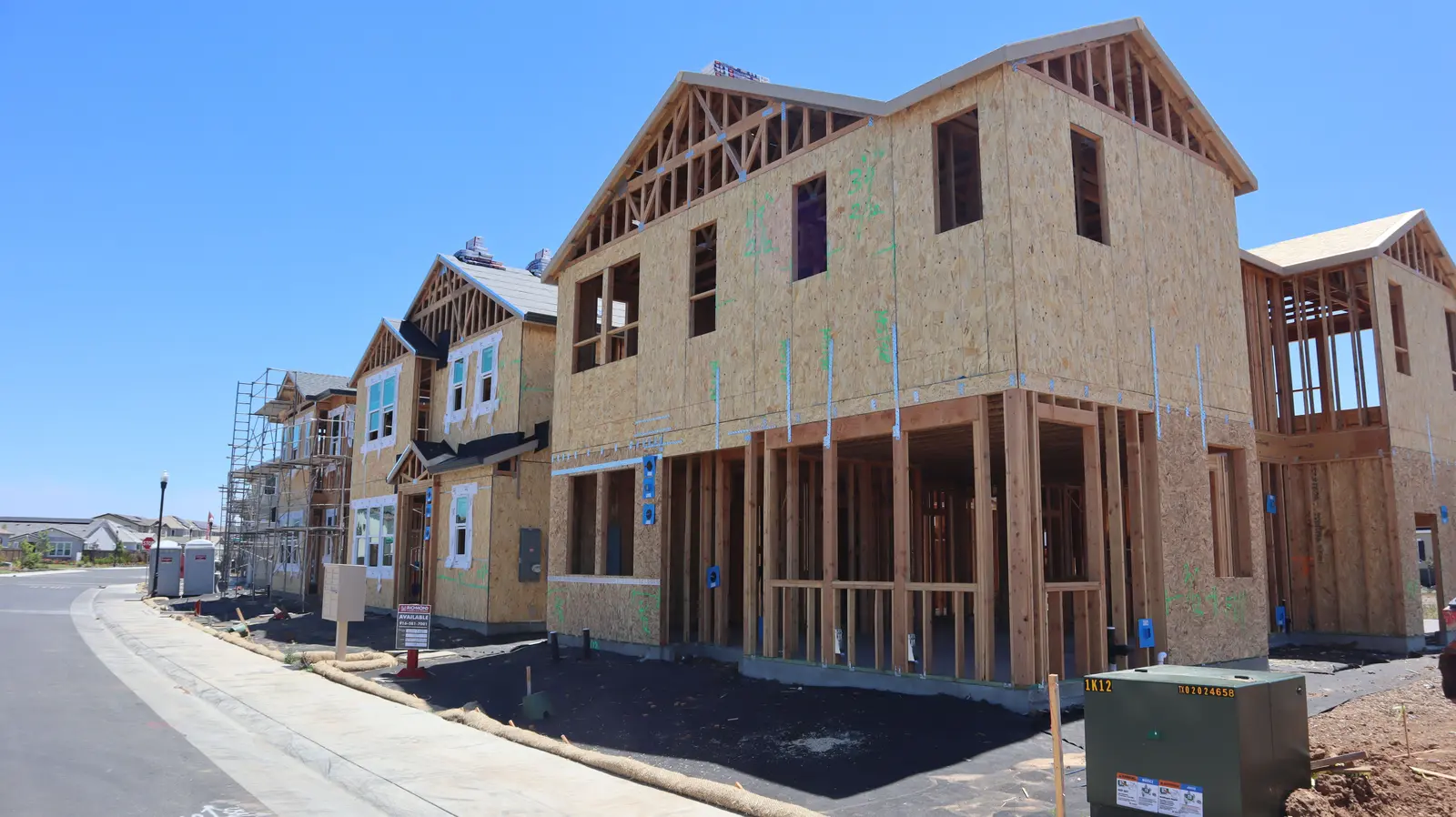
This is the most common new construction purchase in the St. John's metro area. A builder develops a subdivision, builds homes to a set of plans, and sells them finished or at a stage of completion. The buyer chooses a lot and a model, often with a limited set of finishes and upgrades, and closes when the home is complete.
The advantages are real. The home is new, the systems are new, the layout is current, and the builder has done this before. The risks are also specific. The buyer is buying a home that does not yet exist in finished form, or that exists but has not been lived in, so defects may not be visible. Upgrades can add cost quickly, and the contract's allowance for finishes may not cover the finishes the buyer actually wants. Completion dates can move, and a delay of months can affect financing, rental arrangements, and moving plans.
The questions for this route are: what exactly is included in the base price, and what is an upgrade with a price attached? What is the completion date, and what happens if it moves, including whether the buyer can exit and on what terms? Who chooses finishes, by when, and what happens if a chosen finish is unavailable? What inspections are allowed, and at what stages? And what warranty, if any, is given in writing, and who backs it? Those questions are covered in more detail below, but they belong in the buyer's mind from the first visit to a model home, not at closing.
Route two: building a custom home on your own lot
In this route, the buyer owns or buys a lot and hires a builder to build a specific home to a specific design. The buyer has more control over layout, finishes, and quality, and also carries more responsibility. The buyer, not a subdivision builder, must deal with lot servicing, permits, soil conditions, drainage, and the coordination of design, costing, and construction.
The financial structure is different. Instead of a single purchase price paid at closing, the buyer typically pays in stages, through a construction mortgage or through progress payments, and the total cost can move as design decisions change. A fixed price contract and a cost plus contract are different things, and the buyer should understand which one they are signing, what is fixed, what is an allowance, and what happens when an allowance is exceeded. Soil conditions are a particular risk in Newfoundland and Labrador, where rock, water, and drainage can change excavation and foundation costs sharply. A lot that looks flat and easy can hide a rock problem that adds thousands of dollars, and a contract that does not allocate that risk clearly will produce a dispute.
The questions for this route are: who owns the lot and the servicing risk? Is the price fixed, and what is an allowance? What happens if soil or water conditions differ from what was assumed? Who supervises construction, and how often can the buyer inspect? What is the schedule, and what are the consequences of delay on each side? And what warranty is given, in writing, for the structure, the systems, and the finishes? A custom build rewards a buyer who is organised and patient, and punishes a buyer who assumes the builder will absorb every surprise.
Route three: buying a lot and contracting separately
This route looks like route two, but it splits the lot purchase from the building contract. The buyer buys a lot from one party and contracts with a builder, who may or may not be connected to the lot seller. That split can give the buyer more choice of builder, and it can also create gaps. If the lot has servicing, zoning, or access problems, the builder may not be responsible for them. If the builder's schedule slips, the lot seller may not care. If a dispute arises, each party may point to the other.
The due diligence for this route starts with the lot itself, before any builder is chosen. Confirm zoning and permitted use for the intended home, including whether a second unit is allowed if one is planned. Confirm servicing: water, sewer or septic, power, road access, and whether the road is public or private, and who maintains it. Confirm drainage and grading, and whether the lot sits in or near a floodplain or a watercourse buffer. Confirm any restrictive covenants, easements, or development conditions attached to the lot, because those can limit what can be built, how high, how close to the lot line, and what materials can be used. And confirm the total cost of the lot plus servicing plus building, because a cheap lot with expensive servicing can cost more than an expensive lot that is fully serviced.
The contract questions then follow: does the builder's contract assume a serviced lot, and what happens if servicing is incomplete? Who is responsible for permits, and what permits are needed? What is the schedule, and how are delays allocated? As with route two, get the price structure, the allowances, and the warranty in writing, and get independent legal advice on both the lot purchase and the building contract, because they are two transactions, not one.
Route four: buying a new condominium or townhouse
The fourth route is buying a new unit in a condominium or townhouse development, where the buyer owns a unit and shares common property with other owners. This route is common in the metro area, and it has its own risks. The buyer should understand the condominium corporation, the reserve fund, the monthly fees, and what those fees cover. A new development with low initial fees can face higher fees as the corporation builds its reserve, and a buyer who budgets only for the mortgage and tax will be caught out.
The questions for this route are: what is included in the unit, and what is common property? What are the monthly fees, what do they cover, and what is the reserve fund study? What are the rules on rentals, pets, parking, and alterations, and how are they enforced? What warranty, if any, applies to the unit and to the common property, and who backs each? And what happens if the developer retains units or control of the corporation for a period? Condominium law in Newfoundland and Labrador is its own area, and a buyer should get advice specific to it, not general new home advice.
Across all four routes, one rule applies: the model home, the brochure, and the sales presentation are not the contract. The contract is the contract. If a feature, a finish, a date, or a warranty is important to you, it needs to be in the written agreement, with the detail that makes it enforceable. Verbal promises in a sales office are hard to prove and harder to enforce.
The contract: read it as a list of risks, not as a formality
A new construction contract is longer than a resale agreement, and it should be read differently. A resale agreement is mostly about price, closing date, and conditions. A new construction contract is also about what will be built, when, to what standard, and what happens when reality differs from the plan.
Start with the description of the home. Does the contract identify the lot, the plan, the specifications, and the finishes with enough detail that a third party could tell whether the builder delivered what was promised? Vague descriptions such as quality finishes or equivalent materials are invitations to dispute. Ask for specifications, for a finishes list, and for a clear rule on substitutions, including whether the builder can substitute without consent and, if so, on what terms.
Next, look at price and payment. Is the price fixed? What is included, and what is an allowance? How are progress payments or deposits structured, and what protection exists for deposits if the builder fails? In a subdivision purchase, deposits are often staged, and the buyer should understand when each payment is due, what triggers it, and what happens if the buyer cannot close on the scheduled date.
Next, look at dates and delay. What is the completion date, is it a firm date or a target, and what extensions are allowed for weather, material delays, labour shortages, or municipal approvals? What notice must the builder give of delay, and what rights does the buyer have if delay exceeds a stated period? A contract that allows indefinite delay with no buyer exit is a different deal from one that gives the buyer a right to exit after a defined delay.
Next, look at conditions and inspections. Can the buyer inspect at defined stages, such as framing, pre drywall, and pre closing? Who pays for inspections, and what happens if an inspection finds a defect? Can the buyer refuse to close until defects are corrected, or must the buyer close and pursue corrections afterwards? Those answers matter more than any marketing promise about quality.
Finally, look at the closing mechanics. Who pays closing costs, how are adjustments calculated, what happens to HST, and what documents will the buyer receive at closing, including any warranty documents, manuals, and as built information? A buyer who arrives at closing without having read these sections is relying on trust in a transaction that should rely on writing.
Inspections: what to check, and when
Inspections on a new home are not a single event. They are a series of checks at different stages, and each stage catches different problems.
A pre drywall inspection, where the framing, plumbing, electrical, and heating rough ins are visible, can catch structural and systems issues that will be hidden once drywall goes up. A pre closing inspection, where the home is substantially complete, can catch finish defects, such as damaged surfaces, poor paint, misaligned doors, and incomplete items. A post closing deficiency list, where the buyer records defects found after moving in, can catch items that only appear with use, such as a door that sticks in humidity or a drain that is slow.
Hire an inspector who has experience with new construction, not just resale homes, because the defects are different and the standards are different. Ask the inspector to check, at a minimum: structure and framing where visible, foundation and grading, roof and flashing, windows and doors, heating and ventilation, electrical and plumbing rough ins where visible, insulation and vapour barrier where visible, and finishes and fit and finish at completion. Ask for a written report with photographs, and give that report to the builder in writing, with a deadline for correction. Verbal deficiency lists are easy to lose.
Inspections do not guarantee a perfect home. They reduce the chance of a hidden defect becoming an expensive surprise, and they create a record that makes corrections easier to obtain. Budget for them, schedule them early enough that the builder can act on them, and do not waive them to speed up a closing unless you understand exactly what you are giving up.
Warranty: ask nine questions, accept no guarantee
Warranty is the area where a new home buyer is most likely to be misled by general language, so this guide is specific about what to ask and what not to assume.
There is no promise in this guide of a universal new home warranty in Newfoundland and Labrador. The national association identifies this province among those where builder participation in a warranty programme is not generally mandated, so a buyer should not assume a warranty exists, and should not assume that a builder's verbal assurance is a warranty. What a buyer can do is ask, in writing, and get answers in writing, before signing.
Ask these nine questions, and keep the answers with the contract:
One, is there a written warranty, and can I see the full warranty document before I sign, not just a summary? Two, who provides the warranty: the builder, a third party programme, or both, and what happens if the builder is no longer in business? Three, what is covered for the structure, including foundation and framing, and for how long? Four, what is covered for major systems, including heating, plumbing, and electrical, and for how long? Five, what is covered for finishes and fit and finish, and for how long, and what is the process for reporting a finish defect? Six, what is excluded, including owner maintenance, normal wear, and damage caused by alterations? Seven, what is the claims process, including who to contact, in what form, and within what time? Eight, is the warranty transferable to a future buyer, and on what terms? Nine, what happens if the builder and the buyer disagree about whether a defect is covered, and who decides?
If the answers are vague, if the warranty document cannot be produced, or if the builder will not put the answers in writing, treat that as information, not as a reason to assume the best. A builder who provides a clear written warranty, with a defined claims process, is giving the buyer something real. A builder who talks about warranty in general terms is giving the buyer language. The difference matters when a defect appears in year two.
Tax rebates and programmes: what exists, and what does not
Tax treatment for new homes is different from resale homes, and it is worth understanding before you sign, because it affects the total cost and the cash needed at closing.
For first time buyers of a new home, the federal first time buyers' GST rebate can return up to $50,000 of the federal GST on a home up to $1 million, phasing out to $1.5 million, for agreements entered into on or after March 20, 2025 and before 2031. The older GST and HST new housing rebate, which returns 36 percent of the federal portion to a maximum of $6,300 and phases out between $350,000 and $450,000, still exists for buyers who are not first time buyers. Resale homes generally carry no GST, so neither rebate applies to a resale purchase unless the home is new or substantially renovated. Whether a particular purchase qualifies, and whether the builder or the buyer claims the rebate, depends on the agreement and on Canada Revenue Agency rules, and should be confirmed in writing before closing. Do not budget for a provincial portion rebate in Newfoundland and Labrador unless a specific programme is confirmed, because the federal rebate described here covers the federal portion, and no provincial portion rebate for first time buyers has been confirmed for this guide.
The First Home Savings Account and the Home Buyers' Plan also help first time buyers, and they stack with the GST rebate in the sense that they address different parts of the purchase: savings and deposit on one side, tax on the other. The FHSA allows contributions of up to $8,000 per year to a lifetime limit of $40,000, with tax deductible contributions and tax free qualifying withdrawals. The HBP allows withdrawals of up to $60,000 from RRSPs, repayable over 15 years, with repayments starting in the fifth year after withdrawal for first withdrawals between January 1, 2026 and December 31, 2028. The Home Buyers' Amount is a $10,000 claim worth about $1,400 in 2026 at the 14 percent lowest federal rate. These figures are general information only, not tax advice, and eligibility should be confirmed with the Canada Revenue Agency and with a mortgage professional.
For buyers who are not first time buyers, the older new housing rebate and the general HST rules still apply, and the same advice holds: confirm in writing who claims what, and do not assume a rebate that has not been confirmed for your purchase.
Clarenville: process, not market data
Clarenville appears in this guide only for process and programme rules, because no Clarenville market records exist in the data behind this guide. That limit is stated plainly, rather than filling the gap with invented local figures or unverified claims about Clarenville builders or developments. No builder or development in Clarenville is named here, because none could be verified.
What can be said about Clarenville, and about any smaller community in the province, is that the provincial framework applies: the same building code, the same general tax and rebate rules, and the same need for municipal permits and approvals, subject to local bylaws and servicing. A buyer in Clarenville, or in any community outside the metro area, should confirm the local details that matter: municipal servicing and whether the property is on town water and sewer or on well and septic, road access and winter maintenance, zoning and any local development rules, and the availability of builders, inspectors, and trades in the area. Those local details are more important than any provincial average, and they are best confirmed with the town office and with local professionals, not from a metro area guide.
If a future version of this guide can add Clarenville market data from a verified source, it will do so with the source stated. Until then, Clarenville is used for process only, and any page that presents Clarenville market figures without a source should be treated with caution.
A closing checklist
Before you sign for a new home in Newfoundland and Labrador, work through this list, and do not skip a step because the sales process is moving quickly.
Confirm the route you are actually buying: subdivision home, custom build, lot plus contract, or condominium unit, and read the contract for that route, not for new homes in general. Confirm the price, what is included, what is an allowance, and what happens on substitution. Confirm the schedule, the delay provisions, and your rights if delay exceeds a defined period. Confirm inspection stages and the deficiency process in writing. Ask the nine warranty questions, and get the answers in writing. Confirm HST and rebate treatment in writing, and confirm who claims what. Confirm financing, including construction mortgage terms if applicable, appraisal requirements, and what happens if the appraisal comes in below the price. And confirm the municipal side: zoning, permits, servicing, assessment, and tax, for the specific lot.
A new home should be an exciting purchase, and it often is. It is also a large financial commitment made on the basis of plans, promises, and a contract. The buyers who do best are not the ones who move fastest. They are the ones who read the contract, who inspect at the right stages, who ask warranty questions in writing, and who budget for the total cost, not just the price on the brochure.
Sources
Canada Revenue Agency, First Home Savings Account (FHSA), $8,000 annual contribution room and $40,000 lifetime limit: https://www.canada.ca/en/revenue-agency/services/tax/individuals/topics/first-home-savings-account
Canada Revenue Agency, The Home Buyers' Plan, current withdrawal limit $60,000, with temporary repayment relief deferring the start of the 15-year repayment period to the fifth year for first withdrawals between January 1, 2026 and December 31, 2028: https://www.canada.ca/en/revenue-agency/services/tax/individuals/topics/rrsps-related-plans/what-home-buyers-plan.html
Canada Revenue Agency, Line 31270, Home buyers' amount, tax year 2025, claim up to $10,000, page details 2026-07-29: https://www.canada.ca/en/revenue-agency/services/tax/individuals/topics/about-your-tax-return/tax-return/completing-a-tax-return/deductions-credits-expenses/line-31270-home-buyers-amount.html
Canada Revenue Agency, Who can apply, First-time home buyers' (FTHB) GST/HST rebate, agreements with a builder on or after March 20, 2025 and before 2031: https://www.canada.ca/en/revenue-agency/services/tax/businesses/topics/gst-hst-businesses/gst-hst-rebates/first-time-home-buyers-gst-hst-rebate/who-can-apply.html
Canada Revenue Agency, Excise and GST/HST News No. 122, April 2026: the GST/HST new housing rebate is generally 36 percent to a maximum of $6,300, phasing out between $350,000 and $450,000, and the new first-time home buyers' rebate is 100 percent of the GST or federal part of the HST to $1 million, phasing out to $1.5 million: https://www.canada.ca/en/revenue-agency/services/forms-publications/publications/news122/news122-excise-gst-hst-news-no-122.html
Department of Finance Canada, Legislation to make life more affordable receives Royal Assent, March 12, 2026, Bill C-4: https://www.canada.ca/en/department-finance/news/2026/03/legislation-to-make-life-more-affordable-receives-royal-assent.html
Newfoundland and Labrador House of Assembly, Statutes of Newfoundland and Labrador 2018, Chapter R-14.2, Residential Tenancies Act, 2018, assented to May 31, 2018, in force January 1, 2019, for tenancy context where relevant: http://www.assembly.nl.ca/Legislation/sr/Annualstatutes/2018/R-14.2.chp.htm
City of St. John's, Tax Rates page, Current Tax Rates table, 2026 residential rate 9.1 mils with water and sewer services, for municipal tax context: https://www.stjohns.ca/resident-services/property-taxes-assessments/tax-rates/
Internal links used in this guide, all verified live at 200: /new-builds, /buy, /two-apartment, /home-value, /search, /contact, /homes/st-johns-metro.


Comments
Loading comments…