First-Time Home Buying in St. John's: FHSA, Rebates and Costs
Buying
First-Time Home Buying in St. John's: FHSA, GST/HST Rebate, Tax Credit, Down Payment and Closing Costs, in Plain English
Buying your first home in St. John's? This plain English guide explains the FHSA, the RRSP Home Buyers' Plan, the first-time buyer tax credit, the new home GST/HST rebate, minimum down payments, and closing costs in Newfoundland and Labrador.
By Felix OyelekeREALTOR · eXp Realty · Newfoundland & Labrador
October 30, 2026 · 7 min read
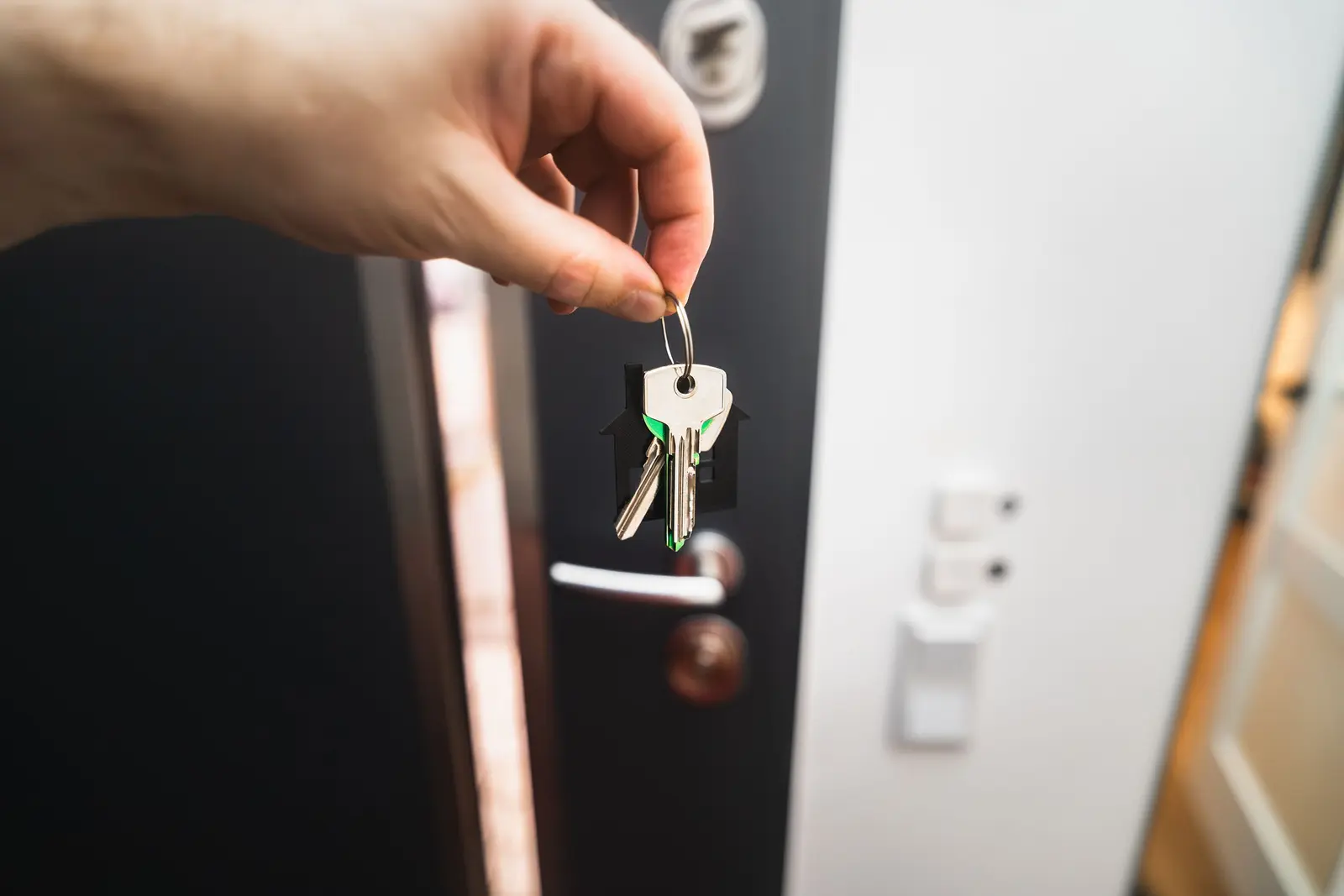
Hand holding house keys in front of a new home door
Buying your first home is mostly a money question
Most first-time buyers in St. John's ask the same thing: how much cash do I actually need, and what help is available? This guide walks through the main federal programs in plain English, with the current limits, so you can see how the pieces fit together before you talk to a lender.
General information only, not tax or legal advice. Program rules change, and your own situation decides what you qualify for, so confirm the details with your lender, your accountant, or your lawyer before you rely on any figure here.
First, are you a first-time buyer?
For most of these programs, you count as a first-time buyer if you did not live in a home that you, or your spouse or common-law partner, owned as a principal place of residence in the current calendar year or in the four calendar years before that. If you owned a home five or more years ago and have not lived in an owned home since, you may still qualify. The exact test varies slightly by program, so check the one you plan to use.
The FHSA: save first, deduct now, withdraw tax-free
The First Home Savings Account (FHSA) is the first place to look if you are still saving. Contributions are generally tax deductible, like an RRSP, and a qualifying withdrawal to buy your first home comes out tax-free, with nothing to repay.
$8,000 of participation room in the year you open your first FHSA
Another $8,000 of new room each following year
A $40,000 lifetime limit
Unused room carries forward, capped at $8,000, so the most you can put in during any single year is $16,000
One timing point matters: your room only starts building in the year you open the account. Waiting to open one does not build room in the background. Transfers from an RRSP into an FHSA count against the same room but are not deductible.
The RRSP Home Buyers' Plan: borrow from yourself
The Home Buyers' Plan (HBP) lets an eligible first-time buyer withdraw up to $60,000 from an RRSP to buy or build a qualifying home, tax-free at withdrawal. If both partners qualify, each can withdraw up to $60,000 from their own RRSP, for $120,000 combined.
This one is a loan to yourself, not a gift. You repay it to your RRSP over 15 years, and any required repayment you miss is added to your taxable income for that year. Repayments normally start in the second year after the year you withdraw. For first withdrawals made from January 1, 2026 to December 31, 2028, the start is pushed to the fifth year after the withdrawal year. Money you plan to withdraw must have been in your RRSP for at least 90 days, so last minute contributions can lose their deduction.
Stacking the two: up to $100,000 per buyer
You can use an FHSA withdrawal and a Home Buyers' Plan withdrawal for the same home, as long as you meet the conditions for each one at the time of each withdrawal. For one buyer, that is up to $40,000 from the FHSA plus up to $60,000 from the RRSP, or $100,000 in total. For a qualifying couple, it is up to $200,000 combined. That is money toward your down payment and closing costs, not a separate grant, and the RRSP portion still has to be repaid.
The minimum down payment, in plain numbers
For an insured mortgage in Canada, the minimum down payment is 5% of the first $500,000 of the price, plus 10% of the portion above $500,000, for homes priced under $1.5 million. Homes at $1.5 million or more require at least 20% down. If your down payment is under 20%, you will need mortgage default insurance, and the premium is added to your mortgage.
Worked examples:
A $400,000 home: 5% of $400,000 = $20,000 minimum down payment
A $600,000 home: 5% of $500,000 ($25,000) plus 10% of $100,000 ($10,000) = $35,000 minimum down payment
The minimum is a floor, not a recommendation. A larger down payment lowers your mortgage, your insurance premium, and your monthly payment.
The first-time buyer tax credit: a break at tax time
The home buyers' amount is a non-refundable federal tax credit. You can claim up to $10,000 on line 31270 of your tax return in the year you buy a qualifying home. Because it is non-refundable, it reduces the federal tax you owe but cannot create a refund on its own. If more than one person is eligible for the same home, the credit can be split, but the total claimed cannot exceed $10,000.
At the 2026 lowest federal tax rate of 14%, the $10,000 claim is worth up to about $1,400 in federal tax saved. Note for readers of older guides: some still show $1,500, because the lowest federal rate used to be 15%.
The GST/HST rebate on a new home: the big one for new builds
If you buy a newly built or substantially renovated home, a separate federal rebate may apply. This is where first-time buyers of new homes can save the most, and where the rules are easiest to get wrong.
The first-time home buyers' GST/HST rebate, introduced by Bill C-4, gives eligible first-time buyers a rebate of 100% of the GST, or the federal part of the HST, on a new or substantially renovated single unit home or condominium unit valued at up to $1 million, to a maximum of $50,000. For homes valued between $1 million and $1.5 million, the rebate is gradually reduced. At $1.5 million or more, there is no rebate.
Key conditions, from the Canada Revenue Agency:
You must be at least 18 and a Canadian citizen or permanent resident
You must meet the first-time buyer test described above
Your purchase agreement with a builder must be dated on or after March 20, 2025 and before 2031
Construction must be substantially completed before 2036
You must be the first person to occupy the home as a residence after construction or substantial renovation
You must not have claimed this rebate before
Two warnings. First, this rebate is for new or substantially renovated homes only. It does not apply to an ordinary resale home. Second, in Newfoundland and Labrador, which is an HST province, the federal rebate covers the federal part of the HST only, not the provincial part. Whether Newfoundland and Labrador offers matching provincial relief was not confirmed in the official sources checked for this post, so do not budget for a provincial rebate until that is verified.
There is also an older, general GST/HST new housing rebate that is not limited to first-time buyers. It is generally 36% of the GST or federal part of the HST, to a maximum of $6,300, and it phases out for homes valued between $350,000 and $450,000, with no rebate at $450,000 or more. The new first-time buyer rebate sits on top of that older rebate, which is how the combined rebate reaches 100% of the federal tax on homes up to $1 million.
One program that is gone: the old First-Time Home Buyer Incentive
If you come across the federal First-Time Home Buyer Incentive in older articles, ignore it for current planning. That shared-equity program stopped accepting new applications on March 21, 2024. It is not the same thing as the FHSA, the Home Buyers' Plan, or the GST/HST rebate, and it cannot be applied for today.
Closing costs: the money beyond the down payment
The down payment is not the whole cash requirement. Budget for legal fees, registration, an inspection, an appraisal if your lender requires one, property insurance, and adjustments for prepaid taxes or utilities. A common planning range is roughly 1.5% to 4% of the purchase price for closing costs, on top of the down payment.
One piece of good news for local buyers: Newfoundland and Labrador has no provincial land transfer tax, which is a large closing cost in some other provinces. That does not make closing free, but it does make the St. John's math friendlier than the Toronto or Vancouver math you may read about online.
A simple order of operations
Open an FHSA as early as you can, even before you are ready to buy, so your room starts building.
Get a mortgage pre-approval so you know your real price range, not just the minimum down payment.
Ask your lender which programs apply to the specific home you want, especially whether it is a new build or a resale.
Confirm your tax credit and any rebate with your accountant before you count that money in your budget.
Keep a separate closing cost fund, so the down payment is not the last dollar you have on closing day.
The bottom line
For a first-time buyer in St. John's, the realistic money stack is the FHSA first, the RRSP Home Buyers' Plan second, the minimum down payment formula third, and then the tax credit at filing time, with the GST/HST rebate on top only if you are buying new. None of these programs replaces saving, and none of them is automatic. But used together, and checked against the current rules, they can move a first home from someday to this year.
General information only, not tax or legal advice. Confirm your eligibility and amounts with your lender, accountant, or lawyer before you buy.


Comments
Loading comments…